If you want to buy a property in Italy there are 3 common mistakes that you want to avoid.
I am Jacopo of Valente Italian properties and On this channel, I break down Italian real estate in plain English.
In this Article, we’re going over the top 3 mistakes foreigners make when buying property in Italy — but not just that. I’ll also show you exactly how to handle each of these situations the right way.
Error 1: Underestimating Italian Bureaucracy
IItalian Bureaucracy When Buying Property: It’s Not Complicated… If You Know What You’re Doing
The mistake many foreigners make is flying to Italy, making an offer, and signing paperwork without knowing the proper steps.
Here are the 5 main steps you need to follow:
1️⃣ Get Your Italian Tax Code (Codice Fiscale)
This is mandatory — not just for buying, but also to register the preliminary contract.
You don’t need to be an Italian citizen or resident to buy property. A simple tourist visa is enough.
2️⃣ Proposal and Preliminary Contract
You’ll hear both terms: proposal (proposta) and preliminary contract (preliminare).
In practice, both are legally binding. Once signed and accepted, you can’t just back out without penalties. So you’d better watch this video until the end before signing one.
Plus, it is mandatory to register the preliminary contract or the proposal. I am saying this because often Italian real estate agents do not respect this rule. When registering the preliminary contract, you’ll pay:
- €200 flat fee
- Plus 0.5% of the deposit as registration tax.
3️⃣ Property Technical Report (Relazione Tecnica)
In some regions of Italy, this report is mandatory; in others, it isn’t. But either way, it’s risky to skip.
The report checks:
- Urban planning compliance
- Cadastral records
- Building code conformity
⚠️ Without this check, you could end up buying a property with hidden legal or structural issues.
That’s why you must include protective clauses in your preliminary contract — in case something comes up later.
We’ll explain those clauses in detail further on in the video.
4️⃣ The Notarial Deed (Atto Notarile)
For the final sale, you’ll need your passport or ID.
Important:
If you don’t speak Italian fluently, you can’t legally sign the deed without a translation. You have two options:
- Bilingual Deed: Both Italian and your language, signed with an official interpreter. It costs more.
- Power of Attorney (Procura): Appoint someone you trust who speaks Italian. Cost: €200–€400. You can do this in Italy or at the Italian embassy in your country.
Yes, this means you can buy a property in Italy without even coming here in person.
5️⃣ If You’re Buying with a Mortgage
There are two extra steps between the preliminary contract and the final deed:
- Financial Approval: The bank checks your financial situation and approves your loan.
- Property Appraisal: A bank-appointed surveyor inspects the property to confirm its value before releasing funds.
Need Help?
Me and my team can handle all these steps for you — from property search to the notarial deed.
If you want guidance through the Italian buying process, just reach out via Instagram (@valenteitalianproperties) or send us an email at:
info@valenteit.comnd error
Error 2: Underestimating Property Risks
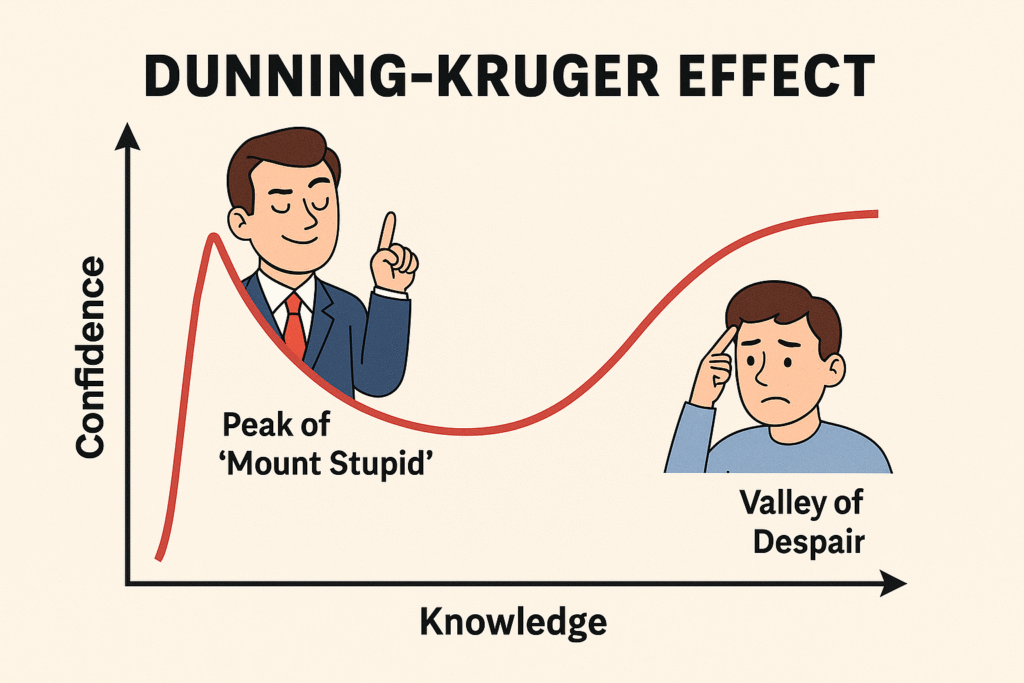
Ever heard of the Dunning-Kruger effect?
It’s when someone with little knowledge overestimates their expertise.
A classic example:
Someone watches two videos on Italian real estate, thinks they’ve got it all figured out, and makes an offer on a property without checking key legal and technical details.
This happens a lot — not just to foreign buyers, but also to many Italians.
The problem is: when it comes to real estate, one small mistake can cost you thousands of euros.
That’s why before making any decision or submitting an offer, you need to follow these two simple strategies to protect yourself from serious headaches:
1️⃣ Add Protective Clauses to Your Offer
In your offer to purchase, include these two key points:
- The seller must declare that the property will be sold free of any encumbrances (like mortgages, liens, or legal claims).
- The seller must declare that the property complies with all urban planning, cadastral, and building regulations.
Just by including these two clauses, you’re already well protected under Italian law.
If the seller doesn’t respect them, they’re required to return double your deposit and may still be liable for additional damages.
2️⃣ Get a Certified Technical Report from a Surveyor (Geometra)
A licensed surveyor (in Italy: geometra) can inspect the property and issue a certified report confirming it meets all legal and technical requirements.
This is the highest level of protection — for a relatively small fee, you buy yourself peace of mind.
If you need this kind of property assessment, get in touch with us. Our team’s surveyor will be happy to help.
With these two simple steps, you can avoid — and prevent — most of the common problems buyers face in Italy.
ERROR 3: Relying Only on the Listing Agent
Relying on the agency that’s advertising a property you like isn’t always the smartest strategy if you want to protect your interests.
Let me explain how the Italian real estate market usually works:
The vast majority of agents in Italy spend their time focusing on getting new listings. Their main priority is the seller.
They’re not really focused on helping buyers. If you’re interested in buying one of their properties, fine. If not — they couldn’t care less.
And even if you do want to buy, they’ll often be more inclined to protect the seller’s interests than to find a fair deal for both sides.
That’s just how things work here — in most cases.
So What Should You Do Instead?
You should work with an agency or real estate advisor you trust.
Someone professional, who shares your values, and who’s actually invested in helping you with your project in Italy.
Either way, you’ll be paying a commission to an agent. So why not pay it to someone who’s actually working for you?
When you hire your own agent, they can openly tell you things like:
- “That area isn’t great.”
- “There are legal risks with this property.”
- “The asking price is too high.”
A listing agent might not be so eager to share those kinds of insights.
Two More Challenges You Should Know About:
1️⃣ Very few agents in Italy actually offer this buyer’s advisory service.
2️⃣ Even fewer agents speak English or work with international buyers.
So finding the right advisor for you may take a little more effort — but trust me, it’s worth it.
Now I would like to know your experience about Italy and questions in the comment, I Will read them and reply.